



Homemade Eggnog
Egg yolks cooked into a thin custard with milk, cream, nutmeg, and vanilla, then chilled until thick. Store-bought eggnog is sweet and shelf-stable; this is something different — rich from...
Read more


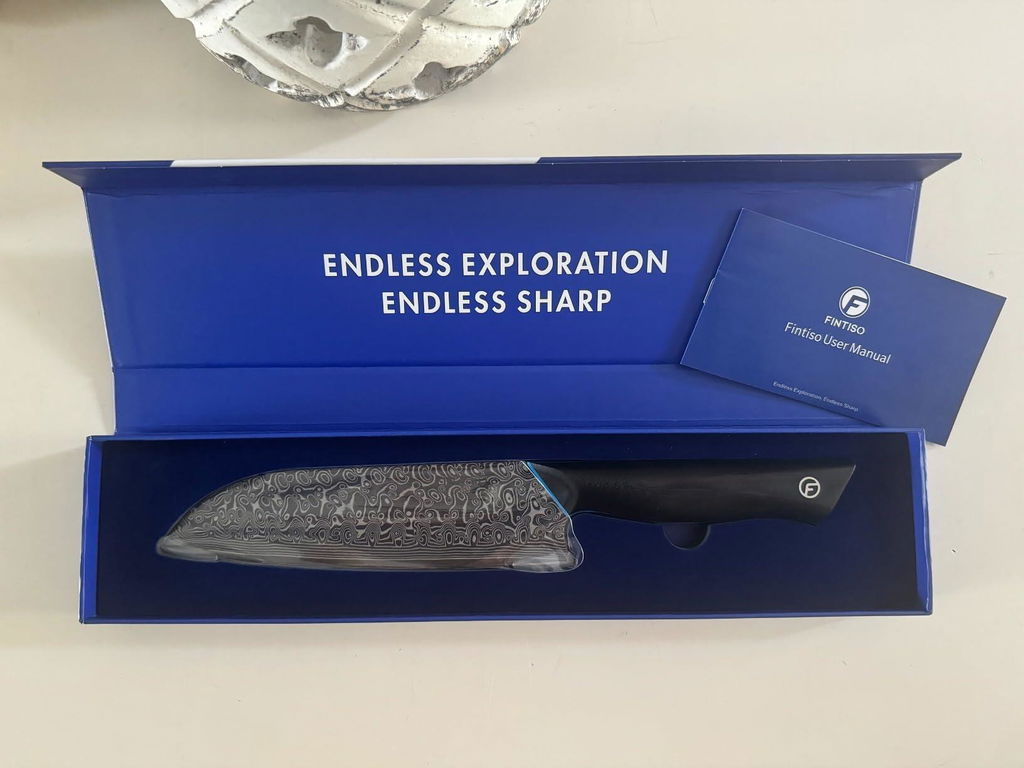
FINTISO ZEUS® 7" Santoku Knife, 67-Layer Japanese Damascus Steel - Includes a Wooden Protective Case is backordered and will ship as soon as it is back in stock.
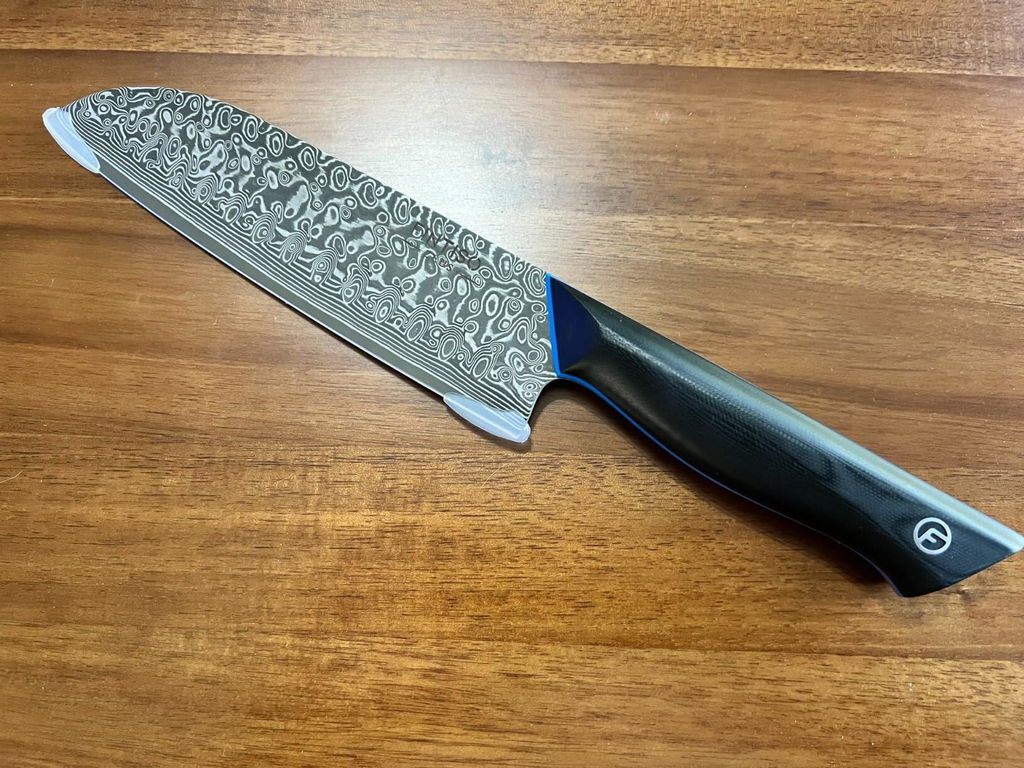
FINTISO ZEUS® 7" Santoku Knife, 67-Layer Japanese Damascus Steel
Blade Material: Classic Japanese VG10 Steel (60±2 HRC)
Edge Angle: 8–12 Degrees per side (Asian-style edge)
Handle Design: Ergonomic Resin & Stabilized Wood Handle with Sloped Bolster
Blade Finish: Sleek Matte Design
Knife Construction: One-Piece Full Tang
Special Treatment: Advanced Oil Quenching
Performance comparable to classic Japanese VG10 steel, high toughness & anti-chip performance, excellent rust resistance for daily kitchen use.
60±2 HRC hardness, 12° edge angle, long-lasting sharpness with minimal sharpening upkeep.
Ergonomic grip relieves wrist fatigue, ultra durable and completely dishwasher safe.
Permanent integral black finish that never fades; stylish blue handle inlays for exclusive art design.
Ideal gift for pros and home cooks; professional after-sales with full lifetime warranty.
I. Cutting Boards
II. Wooden Knife Block (Mold Prevention Is Key)
III. Magnetic Knife Blocks and Strips
Standard Bevel Angles for Kitchen Knives
| Standard Kitchen Knives |
Monolithic Steel: Chef’s knives (standard steel, such as 3CR, 5CR, German steel); the bevel angle for large knives is 25° ± 2, for small knives 22°–28°, and for fish knives 23°–30° (fish knives with excessively sharp edges may reach around 50°). Knives with serrated edges should be able to smoothly cut through A4 printer paper. SG2 Steel Core, VC10 Steel Core: For chef’s knives and cleavers, the edge angle is 22° ± 2. For clad steel cleavers, the edge angle is 24°, 25°, or 26°. For utility knives under 5 inches, fruit knives, and serrated steak knives, the angle is 22°–28°. |
| Outdoor Knives | Blade thickness is 2.2 mm. Depending on the chef’s knife’s edge angle, the blade thickness is 3.5 mm, and the edge angle varies by application: the slicing knife has an angle of 34±2”, while the bone-chopping knife has an edge angle of 48°±2, capable of chopping beef shank bones. Combined chopping and slicing knife: The blade thickness is 3.0 mm, designed for chopping at the front and slicing at the back. The sharpening angle at the front is 33° ± 2, and at the back is 46° ± 2, capable of chopping chicken leg bones and pork trotter bones (when measuring the angle, do not measure the middle, as this is where the angles of the two sides of the blade transition). |
| Blade Thickness for Common Materials | The finished blade thickness for the large knife is 2.2±0.1 mm, and for the small knife, 1.8±0.1 mm. |
The smaller the edge angle, the sharper the blade; however, it is also more prone to damage: when encountering hard objects (such as bones, hard wood, or sand), the blade is highly susceptible to chipping (curving or deformation of the cutting edge) or fracturing (cracking of the cutting edge). To achieve optimal performance, knives designed for different purposes are selected with the edge angle best suited to their specific use.
If the “cutting edge angle” determines how sharp a tool is initially, then the “blade hardness” determines how long it stays sharp and what kind of damage it can withstand. However, higher hardness isn’t necessarily better; rather, it’s important to find a balance between hardness and toughness.
I. High Hardness (60 HRC and above)
Advantages:
Excellent edge retention; highly wear-resistant; remains sharp even after cutting a large volume of materials; requires infrequent sharpening; allows for a smaller bevel angle.
Disadvantages:
① High brittleness makes it prone to “chipping”; although hard, the steel is brittle. If the blade strikes bone, hardwood, or accidentally falls onto tile, a piece of the edge can easily chip off.
② Difficult to sharpen: The steel is too hard for ordinary whetstones to sharpen effectively. Once the blade becomes dull or chips, it takes a significant amount of time and specialized tools to repair it.
II. Low Hardness (Below 55 HRC)
Low hardness means the steel is relatively “soft,” but this is offset by extremely high toughness.
Advantages:
Good impact resistance; the blade is more likely to “curl” rather than “chip.” Because the material is soft, it is easy to sharpen.
Disadvantages:
Poor edge retention; it dulls quickly with even light use, requiring frequent sharpening, and cannot be sharpened to a small bevel angle.
Different steels have different standard hardness ranges: 3CR: 52–55°; 5CR: 54–57°; VG10: 58–62°
| Key Distinguishing Features | Authentic Damascus Pattern | Laser-Etched Patterns |
| Examine The Cutting Edge | The cutting edge features a smooth, solid steel core, and the pattern appears natural. | The pattern may extend directly to the cutting edge, or the edge may appear extremely abrupt. |
| Examine The Knife Spine | There are faint, layered parallel textures. | Smooth and texture-free, indicating a solid, single-layer steel plate. |
| Symmetry of The Patterns on The Left and Right Sides | The patterns on both sides are never symmetrical; rather, they are naturally formed. | Often features perfectly symmetrical, mirror-image patterns. |
| Blade Grinding and Acid Etching Test | Even after grinding away the blackened surface layer, physical texture remains visible after acid etching. | The pattern rubs off easily, and the surface shows no change after acid etching. |
Payment methods
Your payment information is processed securely. We do not store credit card details nor have access to your credit card information.


Received in razor sharp condition, perfectly finished with no apparent deficiencies, feels good in hand, cuts great, easy to clean.
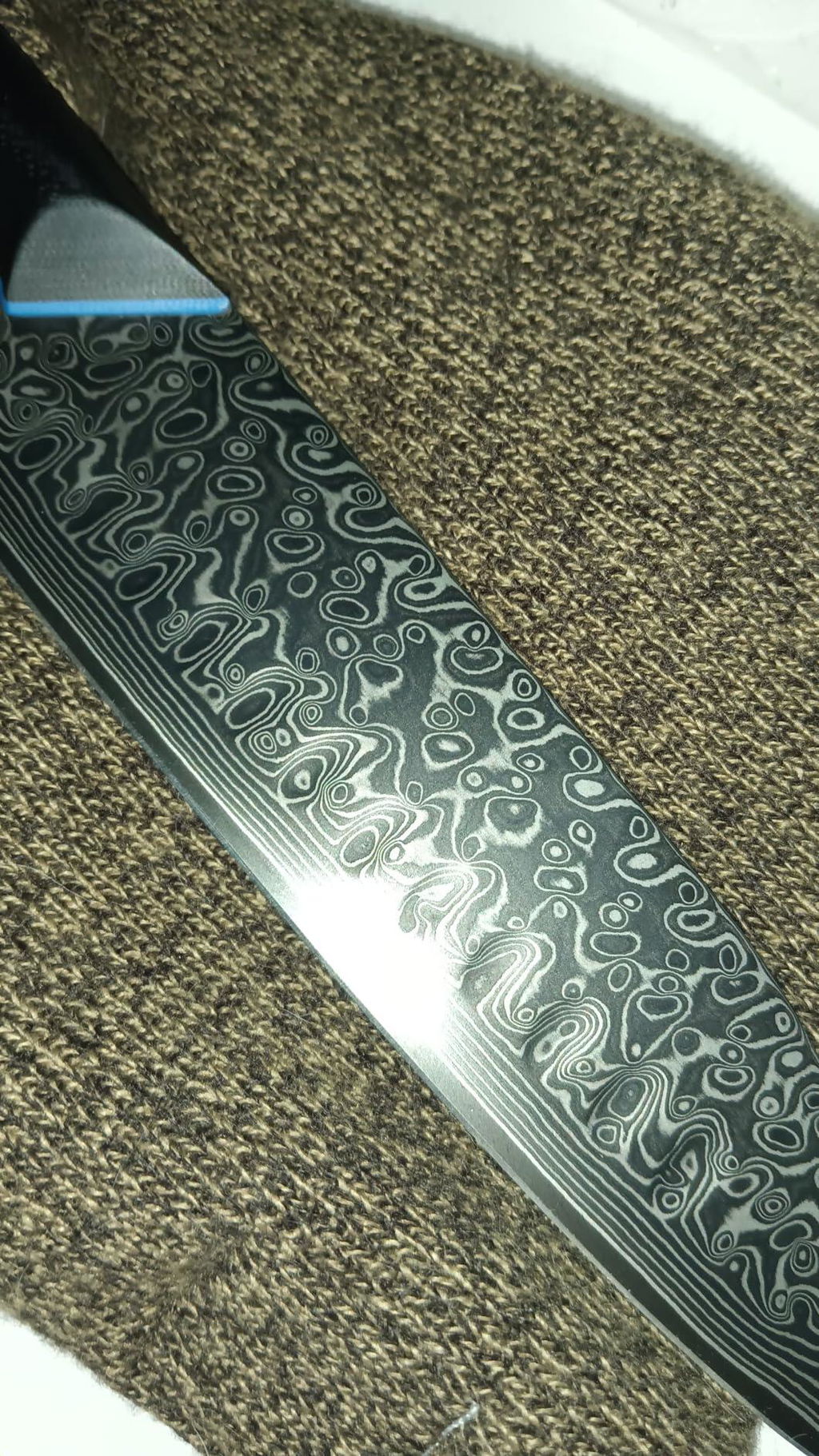
BUT, is this real layered steel? It appears to have a Teflon like coating mimicking a Damascus pattern, OR, is it a new etching technique to bring the pattern out as all Damascus uses some type of acid to highlight the visible pattern lines . Honestly, this to me seems to be some type of slick, slippery smooth coating like a new Teflon pan exhibits.
I love the knife, but will be scraping it to see if a finish comes off, I just haven't wanted to distract from the blades beautiful finish yet....
In general, this is a nice knife, but something's awry with the finish, I will update findings, if it is indeed Damascus, it's a great deal , if it's not, shame on the sellers, but regardless, it's a nice sharp knife I've enjoyed using....
IPDATE: 10/2025: after much use, some of the surface coating has worn of, and I can say without a doubt it's layered steel, AND I can also say it's one of the best knives iny kitchen, will be adding the rest of the set, I can stand by my recomidation !!
It remains the sharpest knife in the kitchen��my wife's favorite!
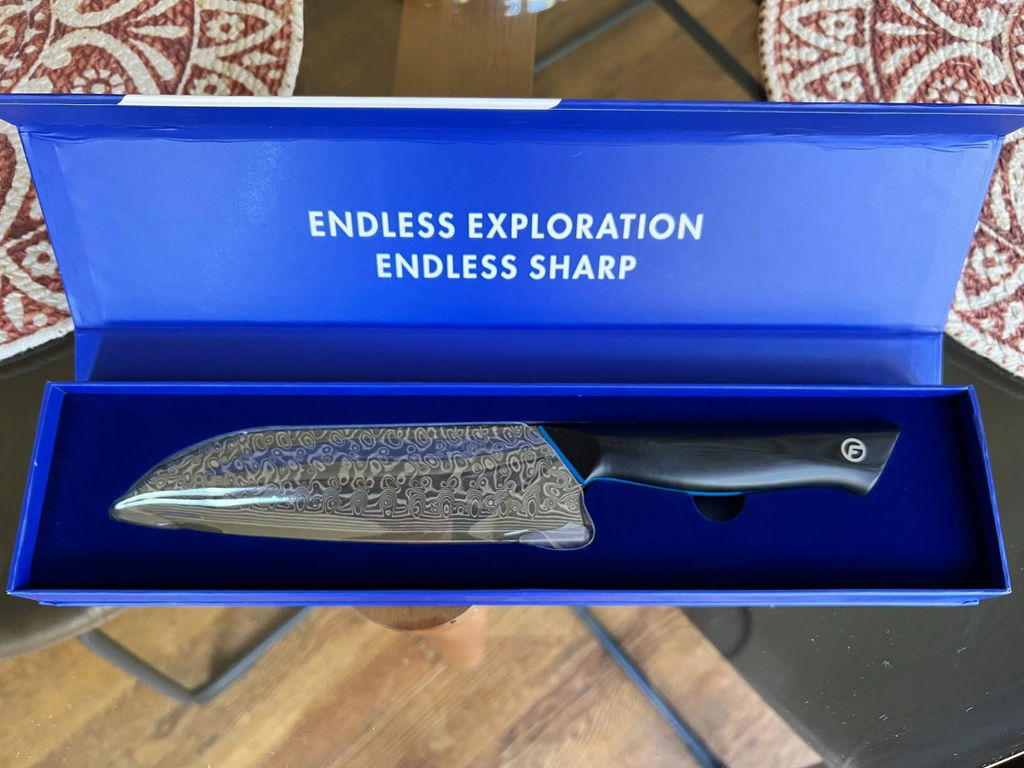
This Santoku style chef's knife is extremely high quality. The use of Damascus steel assures it will retain its extremely sharp edge and be able to be re-sharpened as needed. The appearance is stylish and sleek. The pattern on the blade adds a unique aesthetic. The handle is very solid and provides a very comfortable grip. This knife should only be used by a skilled hand. It has a couple of plastic safety clips for the edges, but is otherwise unsheathed. It arrives in a nice box which can be used for storage. This is a beautiful knife and well worth the price.
It came scary sharp! I should have ordered 2 to see if it's really Damascus steel or if the lines are printed.
This knife is not only the most stunning knife in my kitchen. It is by far the sharpest knife in my kitchen. I could not believe my eyes when I did the paper test and this knife cut through it easier than melted butter. As someone who hosts dinners a lot and loves to grill, this knife is going to be my new go to. I've already had numerous comments about how gorgeous this knife is. It is crafted beautifully and has a great weight and balance to it. I believe that this knife will hold up very well and will get a lot of use in the kitchen.
Update: After using the original knife and loving it, I ordered another style of this knife and it is equally amazing. It has a wonderful feel and the balance point in my hand is wonderful. These knives are wonderful and would recommend to anyone who loves to work in the kitchen.
Super sharp. Better than others.
Absolutely love this knife! We are always purchasing more to share with others.
This knife is very sharp and sturdy. Well worth the money
Excelente producto
The beauty in this knife goes well beyond the aesthetics of Damascus steel (which, if you're into that sort of thing, is quite sexy indeed). It's well balanced and comfortable. A deviation from the traditional handle adds to the ergonomics. For the price, this is incredible value. I've paid much more for this same feel and function. If you're reading this, you're making a solid choice. Also, be careful. This knife is a straight razor on a fancy handle, and it maintains that edge very nicely.
First off, this FINTISO Santoku knife is a great working knife in the kitchen. Out of the box the edge is sharp, and the pattern design is nice. I believe the knife is sharpen at 12 degrees which is insane. The blade is Damascus but I can't 100% attest to that without testing (destroying the blade's appearance) which I'm not going to do. The blade has scallops alone the length of the blade which helps release the product being cut from the blade. The knife is well balanced at the point where the blade meets the handle. The handle has a comfortable grip and is really durable. The blue accent line in the handle is unique. I dropped one star only because of the price.
Note: The price has dropped a lot since I received mine which makes the purchase a great deal for a great knife.
Muy bueno, deberia traer una funda acorde al producto ya que es muy filoso
Beautiful blade! Beautiful, crafty design! I almost don't want to use it because it's so Beautiful! Decent balance, and a little in the heavier side. Great value, too! Looks like a $200 knife! Very sharp and easy to sharpen. Good rubber like grip!
sharp n quality. holds its edge
Great knife. It will cut beautifully through tomatoes to meats.
I like the intense sharpness but watch out the blade butt is wide near the handle and I've nicked myself a couple of times oiling it (It's Damascus steel so you should keep a veneer of oil on it after each use.) It is also well balanced. Who needs to spatchcock the bird when you can just cut in half through the bone cleanly and evenly?
The knives are a gift but they are very impressive and - heavy to hold but well balanced for cutting.
Exellent knife. One of the best I ever had.
Love the feel and performance of these knives. Honestly scary sharp when chopping veggies
Best knife I have ever used
We love this Knife! It is my go-to chef��s knife for almost any kitchen task. Very happy with purchase!
Extremely razor sharp and absolutely beautiful with great balance. Full tang and amazing.
Worth every penny.
67-Layer Damascus Blade
The FINTISO Santoku Knife is hand-forged from premium 67-layer Japanese Damascus steel laminate. The layered structure delivers outstanding inherent toughness and formidable chipping resistance, extending overall service life while boasting superior rust and corrosion protection for everyday kitchen use.
Stays Sharp for a Long Time
Fully sharpened straight from packaging, this Damascus santoku requires no pre-use grinding. Its cutting core consists of high-performance 10Cr15CoMoV steel heat-treated to 60±2 HRC, expertly honed to a 12° bevel per side. It delivers silky, pinpoint precise cuts with impressive long-term edge retention, cutting down repetitive sharpening and simplifying blade maintenance.
Fashioned Ergonomi
Built with robust full-tang construction for perfectly centered gravity balance, this Japanese-style kitchen knife simplifies chopping and slicing bulky ingredients with minimal effort. Crafted from heavy-duty fiberglass-reinforced G10 composite, the grip delivers cushioned comfortable handling to ease wrist strain during extended prep work. Extremely long-wearing and fully dishwasher safe for effortless cleanup.
Distinct Aesthetic Details
Constructed with premium Japanese high-carbon stainless steel, the blade undergoes exclusive metallurgical forging to form one-of-a-kind natural black Damascus grain—zero artificial surface coatings. Elegant blue inlay accents adorn the handle, elevating the knife’s premium texture and bringing refined artistic flair to your kitchen space. The integral blackening treatment resists fading and abrasion permanently, ensuring consistent food-safe reliable performance.
Perfect Gift
Encased in an upscale custom presentation box, this precision santoku ranks as a top pick for professional chefs and passionate home culinary enthusiasts. It serves as an elevated thoughtful gift fit for holiday celebrations, wedding ceremonies and housewarming occasions alike. FINTISO offers dedicated expert after-sales assistance, fully backed by our official lifetime product quality guarantee.
Egg yolks cooked into a thin custard with milk, cream, nutmeg, and vanilla, then chilled until thick. Store-bought eggnog is sweet and shelf-stable; this is something different — rich from...
Read more
Golden oat clusters held together by honey and egg white, baked low and slow until they shatter when you break them apart. The secret is pressing the mixture flat and...
Read more
Barbecue sauce is the foundation of American pit cooking — a condiment that in its classic Kansas City form balances four fundamental flavors: sweet (brown sugar and molasses), sour (apple...
Read more
Baby back ribs are the most tender and lean rack cut in American barbecue — they come from where the pork loin meets the spine, producing shorter, curved bones with...
Read more
The sleepy girl mocktail is a non-alcoholic bedtime drink built on tart cherry juice, magnesium glycinate powder, and prebiotic soda or sparkling water. The drink went viral on TikTok in...
Read more
——USA · Meat Dishes · High protein Taco-seasoned ground beef or turkey, roasted sweet potato, black beans, cottage cheese, avocado, salsa, and hot honey. The black beans are not decoration...
Read more
Model
Dimensions
Country of Origin
Materials
Limited Time Special Events
The first 20 customers to place an order will receive a free FINTISO pocket knife!
You must be at least 18 years old to access this site.

