



Homemade Eggnog
Egg yolks cooked into a thin custard with milk, cream, nutmeg, and vanilla, then chilled until thick. Store-bought eggnog is sweet and shelf-stable; this is something different — rich from...
Read more


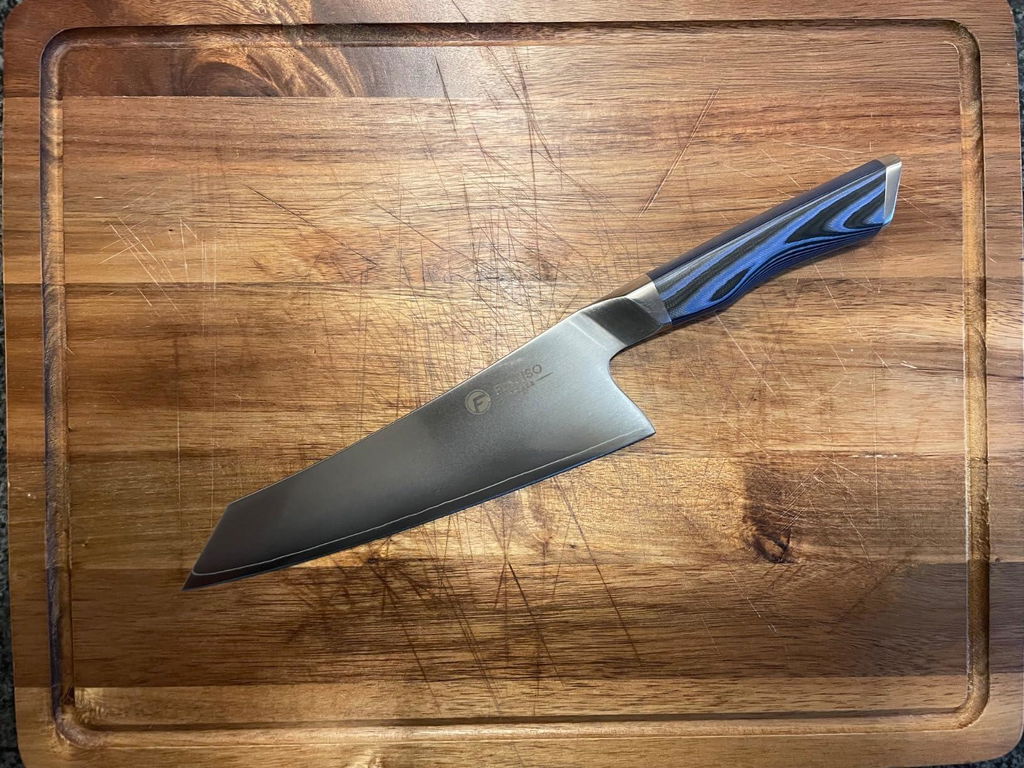
FINTISO BLAZE® 8" Chef Knife, 5-Layers Clad Steel
Blade Material: Premium VG10 Steel Core (60±2 HRC)
Edge Angle: 12–15 Degrees per side (Asian-style edge)
Handle Design: Ergonomic G10 Handle with Sloped Bolster
Blade Finish: Sleek Matte Design
Knife Construction: One-Piece Full Tang
Special Treatment: Advanced Oil Quenching
Performance comparable to classic Japanese VG10 steel, 5-layer clad Japanese steel core hardened to 60 HRC, outstanding edge retention for all American home cooking prep from poultry to tomatoes.
Aerospace fiberglass composite outperforms wood—waterproof, stain-proof, no swelling or cracking, secure grip even with wet hands.
Handles BBQ trimming, veggie dicing, bread slicing and daily meal prep, the primary knife for grill fans and regular home preppers.
Professional ice & heat treatment resists rust and stains; only quick hand wash and dry needed for long daily service.
Solid full-tang structure eases wrist fatigue; streamlined American design delivers pro-level cutting comfort and full control.
I. Cutting Boards
II. Wooden Knife Block (Mold Prevention Is Key)
III. Magnetic Knife Blocks and Strips
Standard Bevel Angles for Kitchen Knives
| Standard Kitchen Knives |
Monolithic Steel: Chef’s knives (standard steel, such as 3CR, 5CR, German steel); the bevel angle for large knives is 25° ± 2, for small knives 22°–28°, and for fish knives 23°–30° (fish knives with excessively sharp edges may reach around 50°). Knives with serrated edges should be able to smoothly cut through A4 printer paper. SG2 Steel Core, VC10 Steel Core: For chef’s knives and cleavers, the edge angle is 22° ± 2. For clad steel cleavers, the edge angle is 24°, 25°, or 26°. For utility knives under 5 inches, fruit knives, and serrated steak knives, the angle is 22°–28°. |
| Outdoor Knives | Blade thickness is 2.2 mm. Depending on the chef’s knife’s edge angle, the blade thickness is 3.5 mm, and the edge angle varies by application: the slicing knife has an angle of 34±2”, while the bone-chopping knife has an edge angle of 48°±2, capable of chopping beef shank bones. Combined chopping and slicing knife: The blade thickness is 3.0 mm, designed for chopping at the front and slicing at the back. The sharpening angle at the front is 33° ± 2, and at the back is 46° ± 2, capable of chopping chicken leg bones and pork trotter bones (when measuring the angle, do not measure the middle, as this is where the angles of the two sides of the blade transition). |
| Blade Thickness for Common Materials | The finished blade thickness for the large knife is 2.2±0.1 mm, and for the small knife, 1.8±0.1 mm. |
The smaller the edge angle, the sharper the blade; however, it is also more prone to damage: when encountering hard objects (such as bones, hard wood, or sand), the blade is highly susceptible to chipping (curving or deformation of the cutting edge) or fracturing (cracking of the cutting edge). To achieve optimal performance, knives designed for different purposes are selected with the edge angle best suited to their specific use.
If the “cutting edge angle” determines how sharp a tool is initially, then the “blade hardness” determines how long it stays sharp and what kind of damage it can withstand. However, higher hardness isn’t necessarily better; rather, it’s important to find a balance between hardness and toughness.
I. High Hardness (60 HRC and above)
Advantages:
Excellent edge retention; highly wear-resistant; remains sharp even after cutting a large volume of materials; requires infrequent sharpening; allows for a smaller bevel angle.
Disadvantages:
① High brittleness makes it prone to “chipping”; although hard, the steel is brittle. If the blade strikes bone, hardwood, or accidentally falls onto tile, a piece of the edge can easily chip off.
② Difficult to sharpen: The steel is too hard for ordinary whetstones to sharpen effectively. Once the blade becomes dull or chips, it takes a significant amount of time and specialized tools to repair it.
II. Low Hardness (Below 55 HRC)
Low hardness means the steel is relatively “soft,” but this is offset by extremely high toughness.
Advantages:
Good impact resistance; the blade is more likely to “curl” rather than “chip.” Because the material is soft, it is easy to sharpen.
Disadvantages:
Poor edge retention; it dulls quickly with even light use, requiring frequent sharpening, and cannot be sharpened to a small bevel angle.
Different steels have different standard hardness ranges: 3CR: 52–55°; 5CR: 54–57°; VG10: 58–62°
| Key Distinguishing Features | Authentic Damascus Pattern | Laser-Etched Patterns |
| Examine The Cutting Edge | The cutting edge features a smooth, solid steel core, and the pattern appears natural. | The pattern may extend directly to the cutting edge, or the edge may appear extremely abrupt. |
| Examine The Knife Spine | There are faint, layered parallel textures. | Smooth and texture-free, indicating a solid, single-layer steel plate. |
| Symmetry of The Patterns on The Left and Right Sides | The patterns on both sides are never symmetrical; rather, they are naturally formed. | Often features perfectly symmetrical, mirror-image patterns. |
| Blade Grinding and Acid Etching Test | Even after grinding away the blackened surface layer, physical texture remains visible after acid etching. | The pattern rubs off easily, and the surface shows no change after acid etching. |
Payment methods
Your payment information is processed securely. We do not store credit card details nor have access to your credit card information.


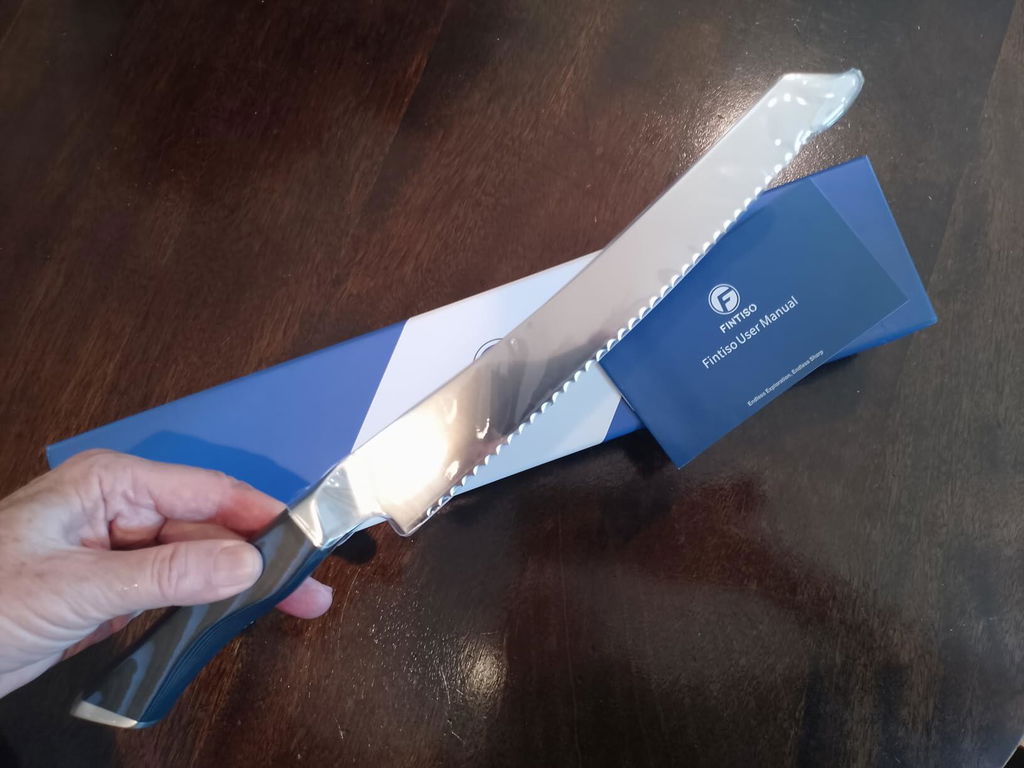
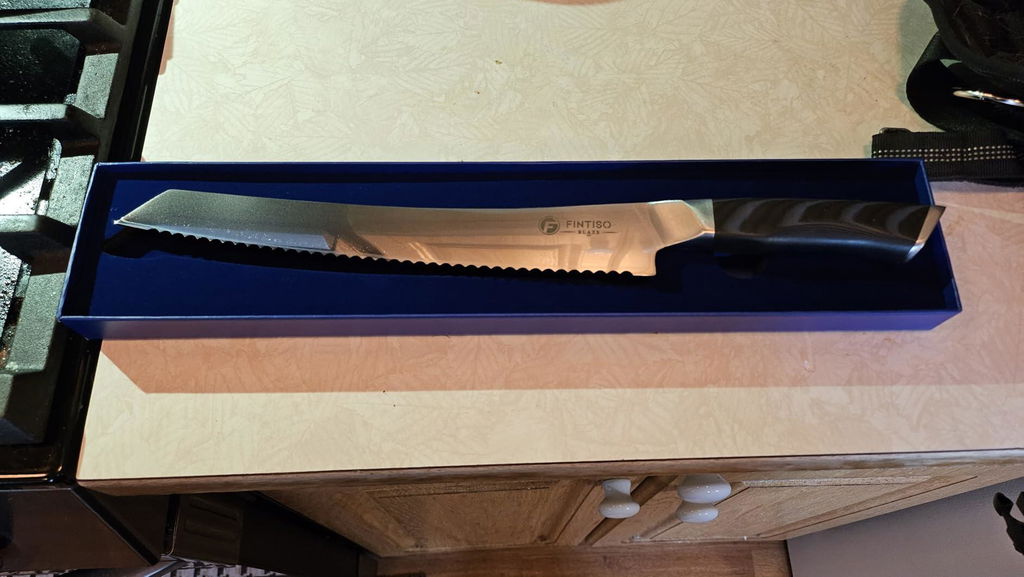
This is an absolutely beautiful knife, this brand always seems to come through with terrific professional level kitchen tools. It is extremely sharp so be careful, and I really like the slight bow shape to it which is helpful for cutting certain types of bread such as baguettes. A great handle nicely made beautifully presented. Would make a great gift as well with the type of box it comes in
This is a reply by the admin
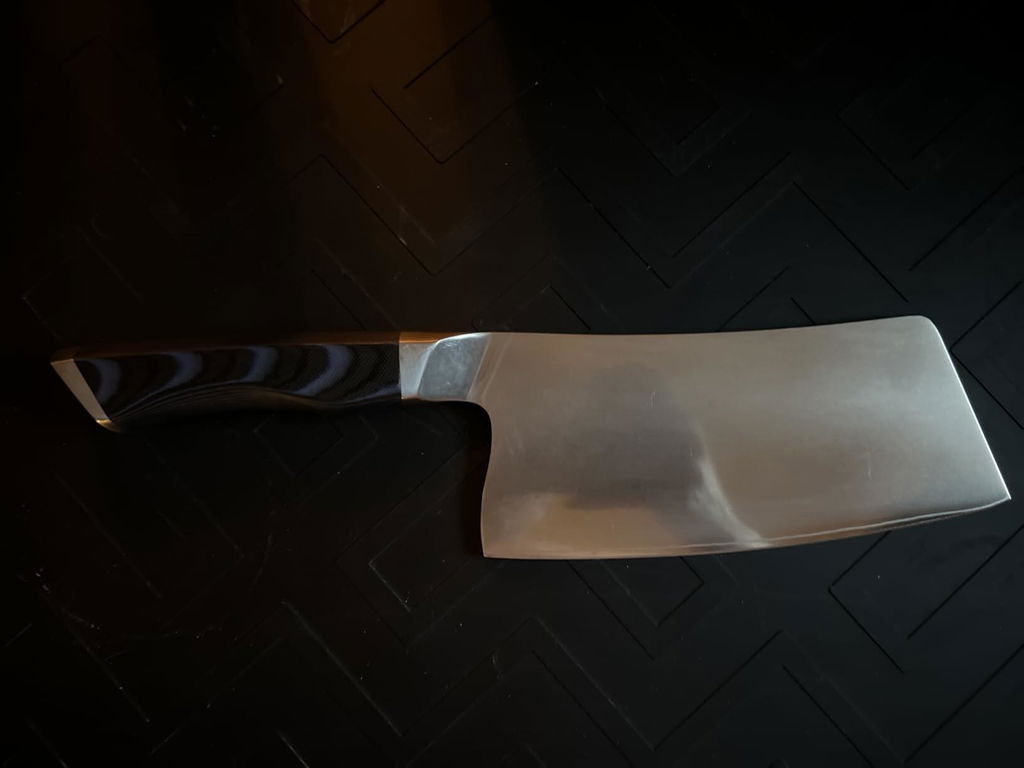
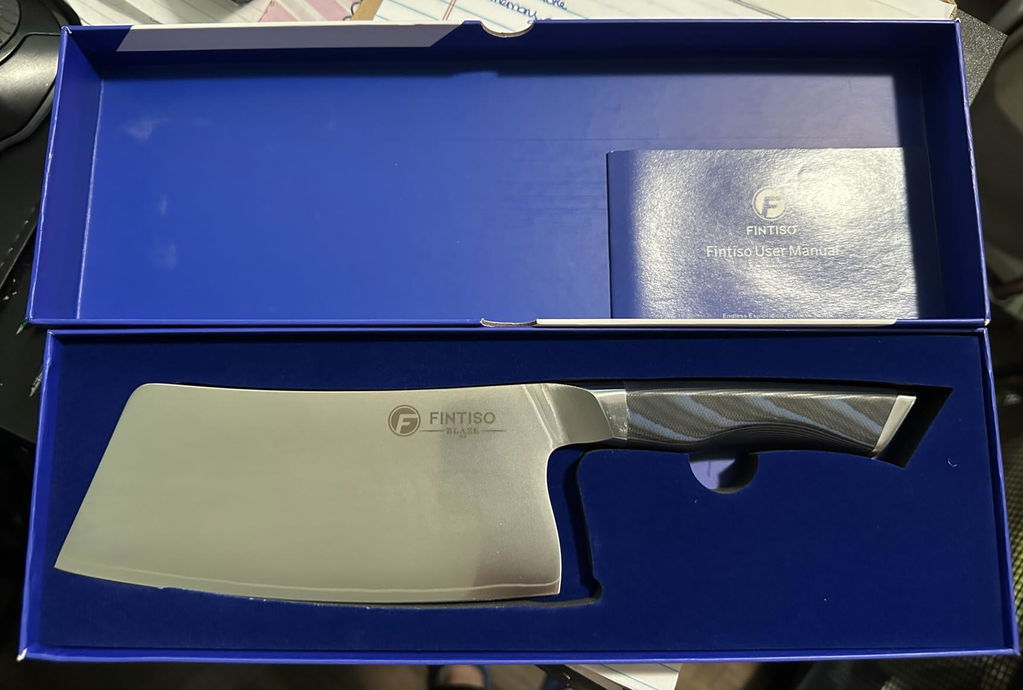
am a fan of decent knives. I worked in a lot of kitchens when I was young. That always demanded having a good knife. This knife is clearly a cleaver. I��ve always liked regular old chef knives myself. I was skeptical when I saw this one. This knife is awesome. Right out of the box, you can feel the balance. It��s heavy. You can get a really good grip on it and it doesn��t feel like it��s just gonna slip around. I��ve used it for a good month and a half and it has quickly become my favorite knife. I keep using it for things I have no business using a big knife on. It just feels good to use. Overall, it��s thick, balanced, and heavy. It��s very easy to control. It feels good in my hand. Absolutely deserves five stars.
This is a reply by the admin
Have you ever used a tool you didn��t feel qualified to use? I did when I used this knife for the first few times. It is so well balanced and sharp that I was intimidated. That��s saying a lot. This is a nice instrument. I have a few other nice knives but now I know the difference.
This is a reply by the admin
I have a couple of these knives and found this bread knife and was super excited! Wow, talk about a sharp knife! This slices with such ease through bread like butter! This knife has a very sturdy handle that's easy to hold. The blade is amazing, super sharp. I highly recommend this bread knife!
This is a reply by the admin
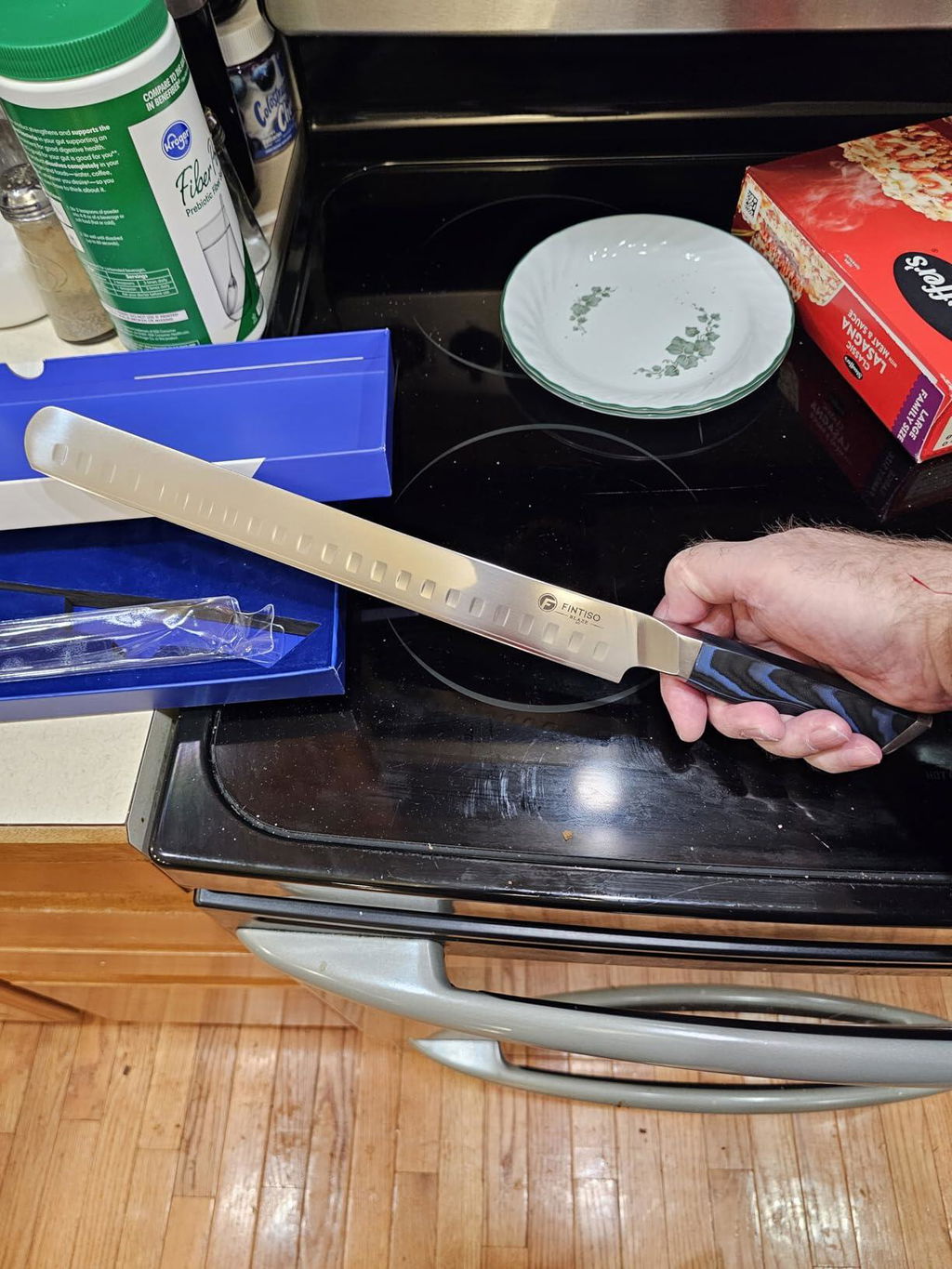
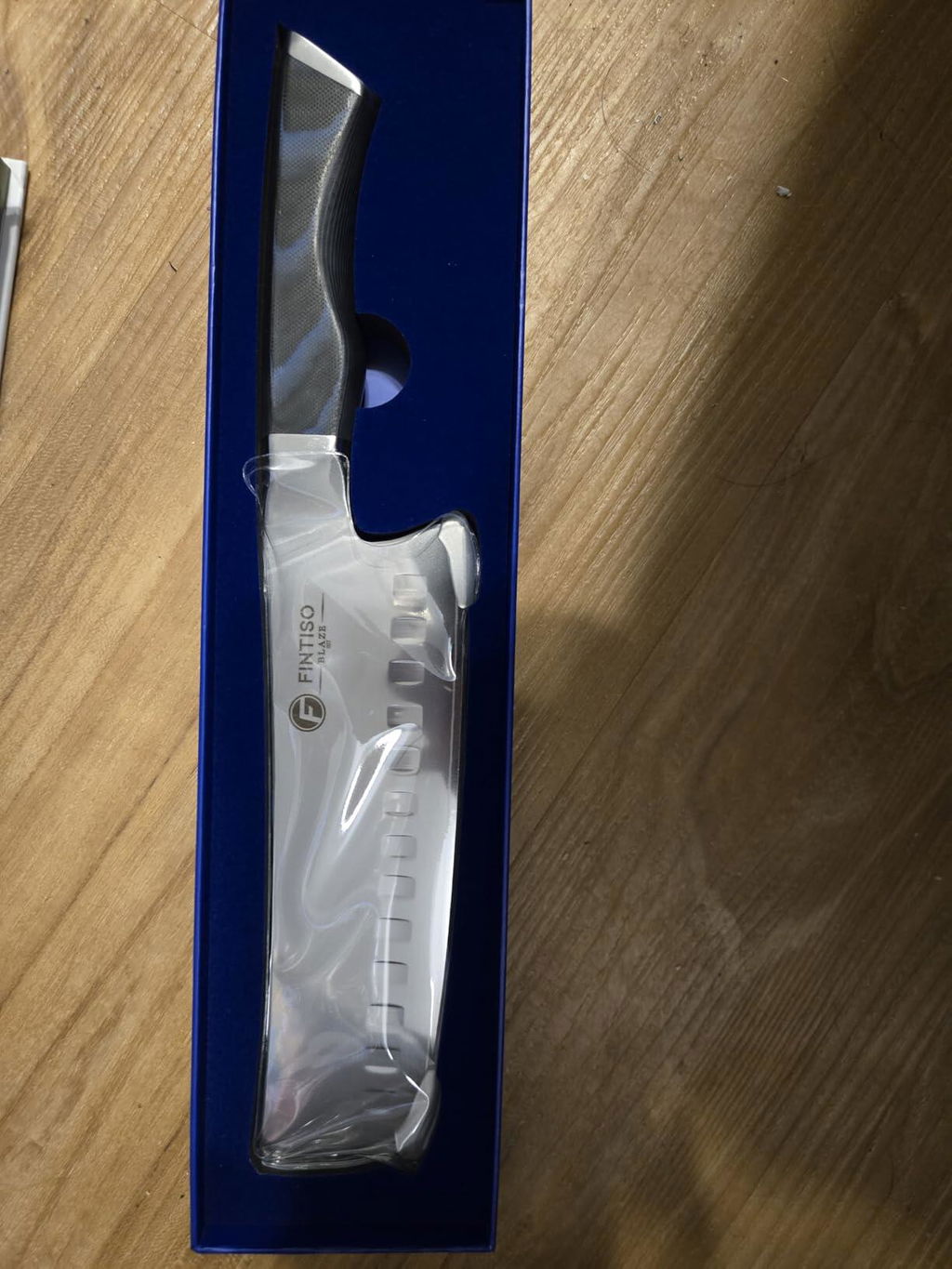
Beautifully constructed brisket carving knife. Long blade with full tang through an ergonomic handle. This blade holds a nice edge and I expect it to last for many years to come.
This is a reply by the admin
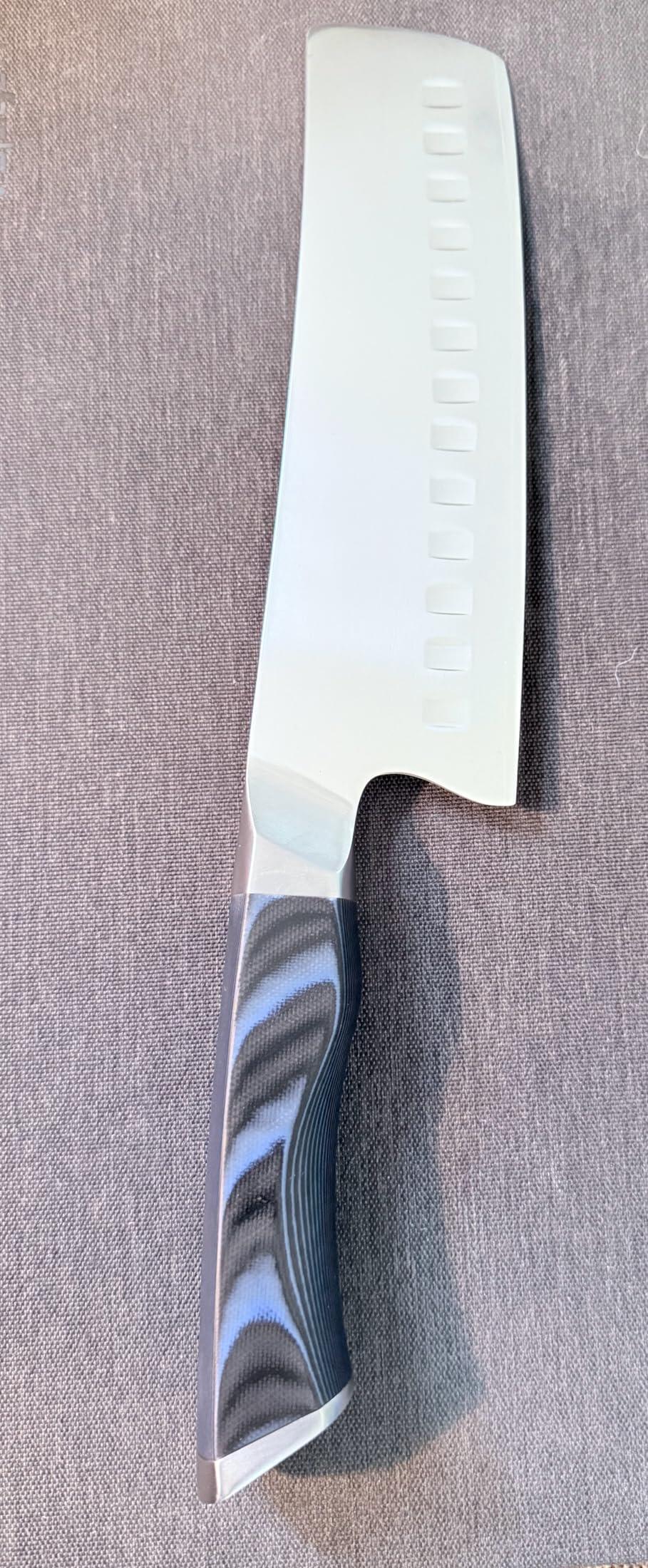
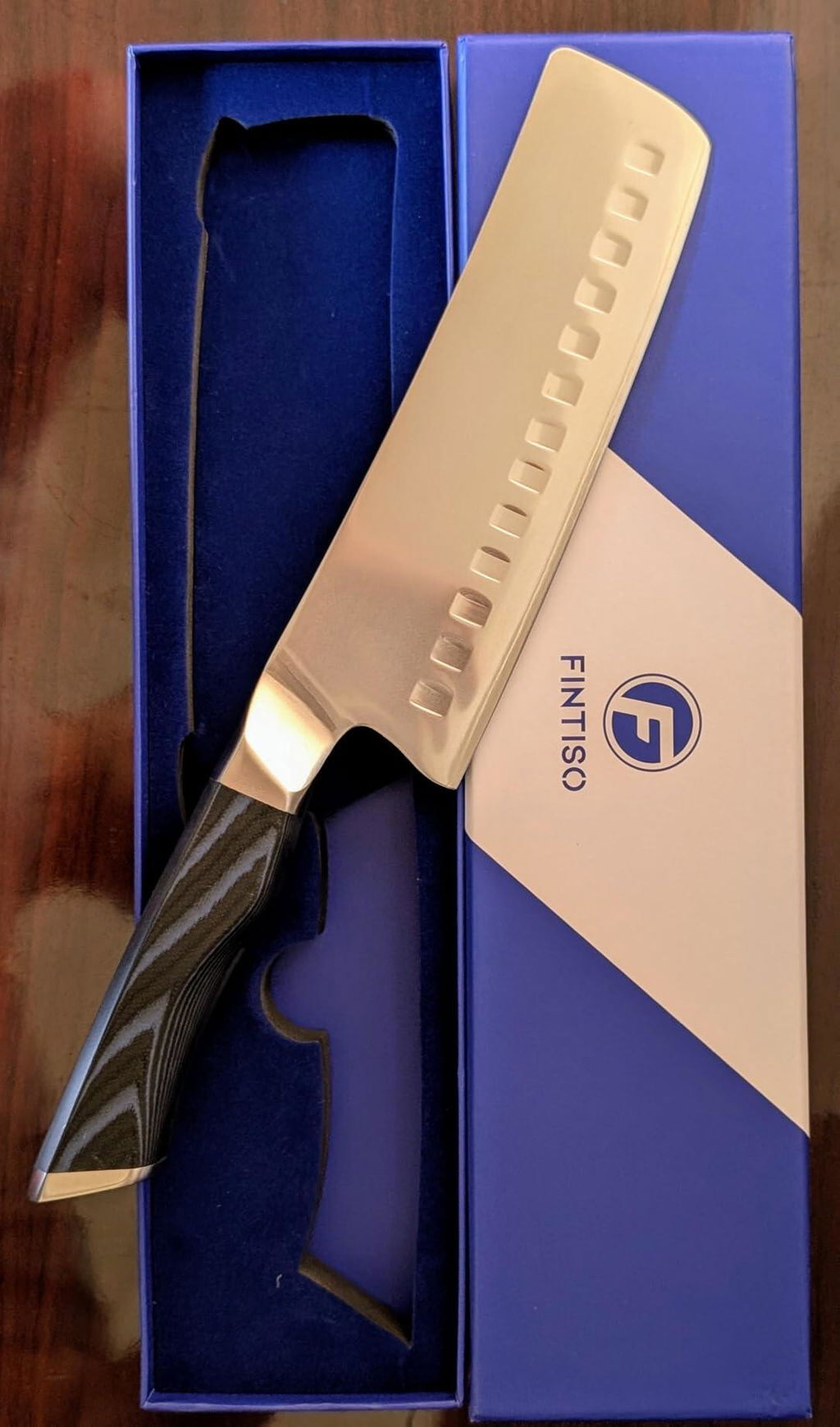
This knife is a 7" veggie Nakiri knife! It has side wells (granton edge) for helping the vegetables slide off. The blade is super sharp. It is 5 layers of steel with a full tang. It has a comfort grip synthetic handle that feelsgood in the handle. It has ridges to prevent slippage. This knife is made of high quality Japonese steel!!!! The hardness is 60HRC which means the blade is tough and durable. This is a solid knife that performs great, easy to use, functions perfectly, is well balanced, is made of premium materials, designed well and a great value!
This is a reply by the admin
I think what is important is that, not only are these knives sharp, they have remained sharp over the last week as my daily slicer. I am just getting into the kitchen and purchasing utensils, so I am not familiar with the best of things. However, I know these are better than the Cuisinart knives I normally pick up from the Costco. Don't tap your finger to test the sharpness.
This is a reply by the admin
This is a really good knife - good quality steel, really sharp, well balanced, medium good weight (a tiny light & thin for my preference), really good construction, comfortable & easy to grip handle, really nice coloring/design of the handle material, holds an edge for a while but fairly easy to sharpen, cuts cleanly & easily and looks really nice. Expensive but much better after all the discounts/coupon. Comes in a nice display/gift box - would make a good gift idea. Nice knife - I recommend.
This is a reply by the admin
This is a tremendous nakiri knife: sharp, beautiful, excellent in use. Made of a Chinese steel that's the equivalent of Japanese VG10, an excellent steel for knives with good sharpening, hardness and edge retention while not being brittle. The handle is of G10 and really quite beautiful in my opinion. All-in-all, a superb addition to any kitchen.
This is a reply by the admin
Overall this is a beautiful and functional knife. It's not perfect but I would say it performs as good or better than any 40$ knife I have ever used. The Fit and finish is excellent with no manufacturing defects. The blade isn't razor sharp but it's very close. Overall, a good product that I have no problem recommending for the price.
This is a reply by the admin
Very nice and beautiful knife. Well balanced and sharp to cut through meat and fish. I especially like using for fish by doing gill, guts and head removal, and filleting fish meat from its bone. It��s similar to what the deck hands use on the fishing boat but better.
This is a reply by the admin
This knife made using VG10 High Carbon Stainless Steel possesses excellent hardness, sharpness and durable qualities. It's beautiful to look at but heavier than typical Japan made Nakiri vegetable knives (we've owned quite a few through the years). So, it just depends on your preference: if you like heavier and heavy duty knife, this one will work great but if you like your vegetable knife to be thin, light and nimble, this one is not (this one can be a work horse, sharp and easily resharpen if needed and very durable). So, a very SHARP, beautiful and high quality knife and I consider the $70 listing price a good value. Highly recommend.
This is a reply by the admin
This Fintiso 10 inch knife is the best bread cutting knife I have ever tried, and I have tried a lot of them. I bake all of our bread for my household, and trying to cut it easily has been a long time headache. After buying numerous knives and gadgets to hold the bread while cutting it, I was about ready to stop baking my bread. But this knife changed all that. The extra long carbon stainless steel knife can cut soft, freshly baked artisan bread without flattening the whole loaf. In addition, the slices are all smoothly cut. I was able to make much more uniform cuts with this knife as opposed to others, so the slices are good for sandwiches and also fit well in a toaster. Being as long as it is, I was able to do a sawing motion without running out of blade. I noticed the serrated edge seems to have more little teeth per inch than a lot of knives, and they are more pointed, instead of sort of scalloped. This blade is made to last a very long time and stay sharp. The handle is very attractive and comfortable. I think the marbled blue handle is nice looking, and unlike some knife handles that have a definite right handled molding to them, this one does not. Being left handed, I appreciate that a lot. The box this knife arrived in is well suited to the knife inside and it would make a great gift for someone who spends time in their kitchen. The price is quite reasonable given the high quality of this knife. I would highly recommend this knife to anyone who wants to slice their breads and cakes with ease.
This is a reply by the admin
Very nice to use. Sharp and weighted, they are easy to use and beautiful. Full tang blade.
This is a reply by the admin
This knife is so beautiful and well built. It is sharp, so, so sharp. It has just enough give to make it perfect for skinning or boning a fish filet. The blade extends into the handle. It is so well made, I expect it to last for years. The weight is just perfect and it's so comfortable in my hand. It's functional but also pretty enough to frame and hang on a wall.
This is a reply by the admin
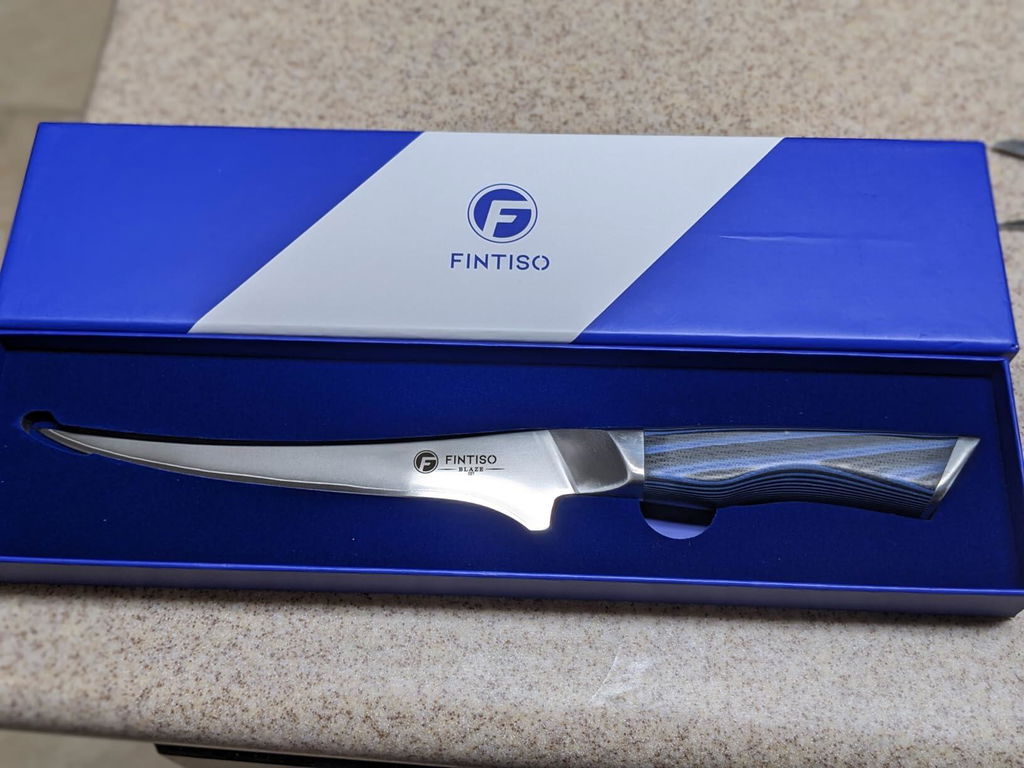
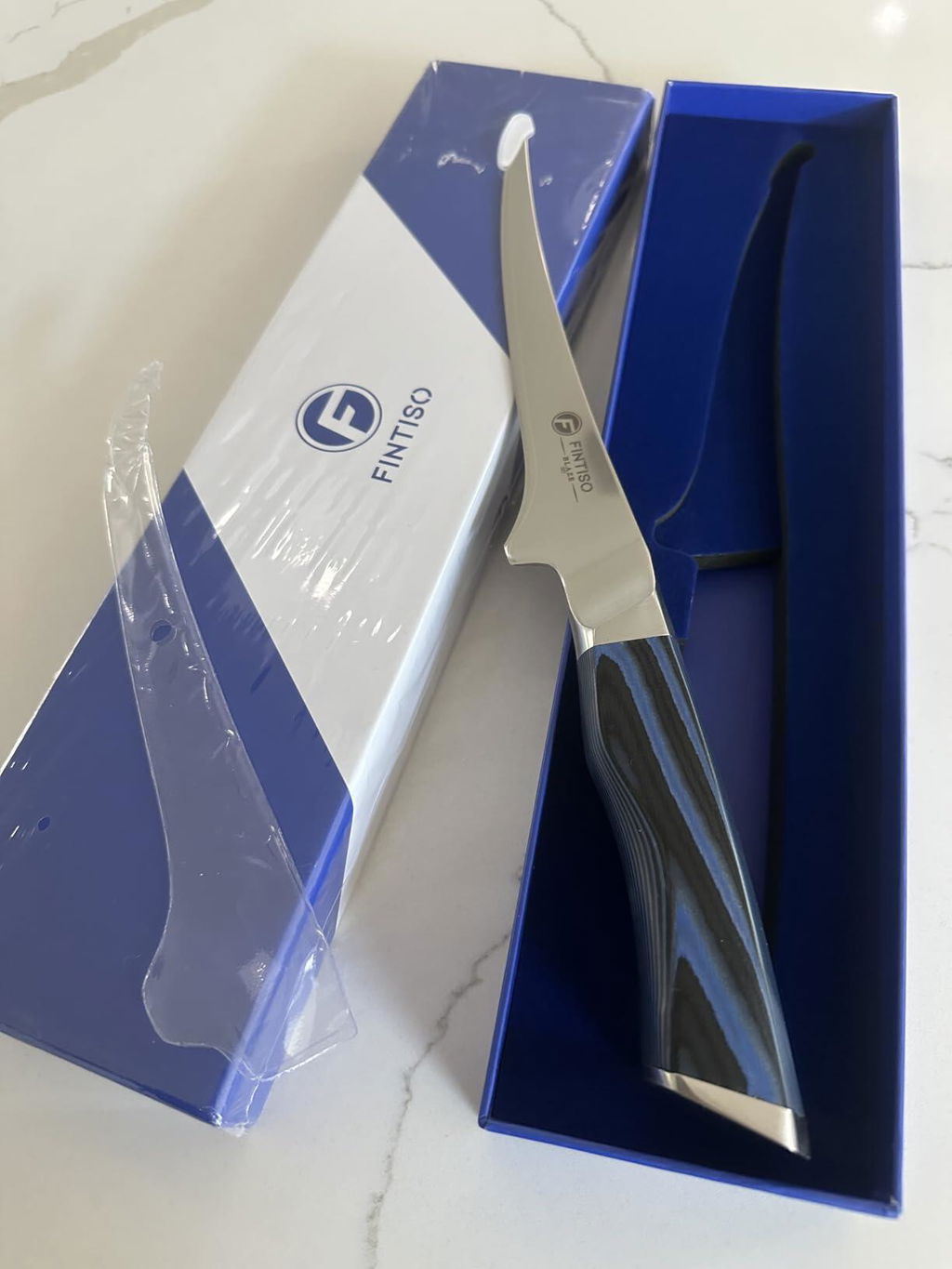
This is a high end, super sharp fish fillet knife with a beautiful G10 engineered handle that feels great in your hand. Made from 5 layers of Japanese steel, I can see using this to debone fish, make sushi, or other meats where you need a long, small blade to get into the crevices. I love the blue colored blade, it's unique, and you'll definitely get some compliments on it at your next dinner party. Can't wait to put this to use!
This is a reply by the admin
This is a really sharp and well made bread cutting knife. It looks good and works well. The serrated edge makes perfectly cut pieces of bread every time. It has good hand feel and does not drag when cutting bread.
This is a reply by the admin
Blade is 8" long, total length is 13". Nice knife! Well balanced, handle is beautifully laminated blue wood. Doesn't look like anything that could go in the dishwasher, but it is super easy to clean as there are no corners or crevices in the design. Came with a sharp edge. It's made of high carbon steel (magnets stick to it) so you can use it on a magnetic knife rack.
This is a reply by the admin
This is a beautiful knife. Well made, fine edge, feels great in the hand and slices meat (we tried a tritip) and watermelon with ease. The weight of the knife is properly balanced, the handle is handsome, smooth and feels good at the bolster. Honing is simple and clean. Time will tell how well the edge holds but from the outset this brisket knife looks and feels very nice.
This is a reply by the admin
This knife is a work of art! The sign is really beautiful not only the handle is comfortable to use, but it also has this unique design. The knife is pretty lightweight and comfortable to handle. And the blade is super sharp and precise. You can use it to filet fish or any other meat and also works great with vegetables. I definitely recommend!
This is a reply by the admin
These are beautiful. The ergonomics are very nice, making these easy to hold and use. I really like the color of the handles,and the finish is perfect and smooth. Really nice cutting edges, very sharp.
This is a reply by the admin
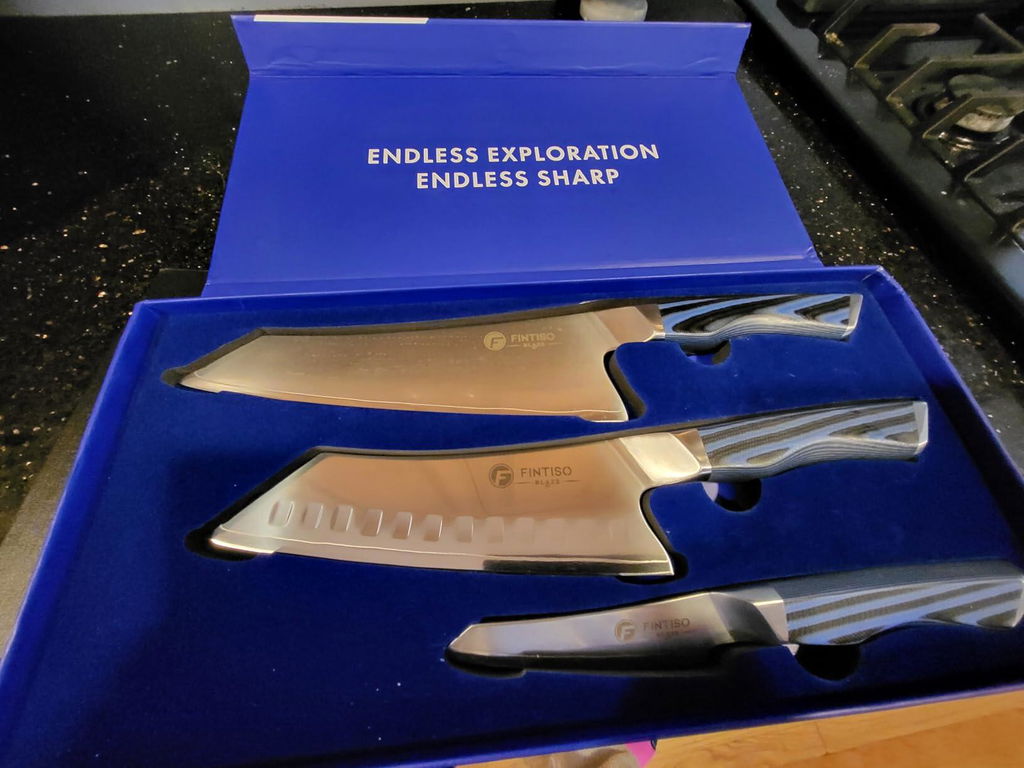
This is a great 8�� kitchen knife. Excellent quality, handle and appearance (the blue handle is very nice). The blade is made of heavy steel and it is very sharp. I truly believe this will last for years and years. The knife or the full set would make a great gift. I would definitely recommend considering this if you��re shopping in this price range.
This is a reply by the admin
Beautifully crafted, high-quality filet knife! Sharp blade with comfortable grip and well-balanced for a natural feel. Fishing season is approaching, so having another filet knife on the boat is always a good thing. The blue color will perfectly match the trim color of my boat, but it��s almost too nice for that harsh environment!
This is a reply by the admin
Japanese Steel Core
Expertly crafted for everyday home cooking and detailed prep work alike, this chef knife delivers surgical precision for tasks ranging from portioning whole poultry to thinly slicing heirloom tomatoes. Built around a 5-layer clad Japanese 10Cr15CoMoV steel core hardened to 60 HRC, the blade boasts exceptional edge retention under frequent heavy use, minimizing frequent re-sharpening. A dependable all-purpose staple engineered to elevate every American home kitchen.
Aerospace-Grade G10 Handle
Conventional wooden grips are prone to cracking, moisture absorption and slippery surfaces; our premium G10 handle eliminates these flaws entirely. Composed of compressed fiberglass composite sourced from aerospace manufacturing standards, it features full waterproof and stain-resistant properties. It maintains a firm, secure hold even with damp hands while handling fresh produce or raw proteins, tailored to match the efficient, confident cooking style of American households for safe, seamless prep.
Multi-Purpose Blade
This versatile 8" chef’s blade effortlessly handles every common kitchen task: mincing aromatics, dicing vegetables, trimming brisket, and slicing crusty artisan bread. It becomes your go-to blade for nearly all daily cooking scenarios, from weekend backyard BBQ prep to quick weeknight meals. Ideal for casual grill lovers and consistent daily meal preppers, it streamlines prep work and enhances the overall cooking experience.
Rust & Stain Resistant
Designed for low-effort, consistent high performance, each blade undergoes rigorous ice tempering and precision heat treatment to bolster inherent rust and stain resistance. Simple hand washing followed by a quick towel dry is all the care required—no complicated maintenance or delicate handling needed. A steadfast, always-ready workhorse built for long-term daily use.
Ergonomic Fit
Carefully calibrated weight distribution drastically cuts wrist strain during lengthy cooking sessions. Robust full-tang construction paired with the contoured ergonomic G10 handle grants complete, intuitive cutting control, whether experimenting with new recipes or swiftly assembling weeknight dinners. It brings authentic professional-grade performance to residential kitchens, paired with a streamlined, timeless American-inspired design engineered to fit naturally within your grip.
Egg yolks cooked into a thin custard with milk, cream, nutmeg, and vanilla, then chilled until thick. Store-bought eggnog is sweet and shelf-stable; this is something different — rich from...
Read more
Golden oat clusters held together by honey and egg white, baked low and slow until they shatter when you break them apart. The secret is pressing the mixture flat and...
Read more
Barbecue sauce is the foundation of American pit cooking — a condiment that in its classic Kansas City form balances four fundamental flavors: sweet (brown sugar and molasses), sour (apple...
Read more
Baby back ribs are the most tender and lean rack cut in American barbecue — they come from where the pork loin meets the spine, producing shorter, curved bones with...
Read more
The sleepy girl mocktail is a non-alcoholic bedtime drink built on tart cherry juice, magnesium glycinate powder, and prebiotic soda or sparkling water. The drink went viral on TikTok in...
Read more
——USA · Meat Dishes · High protein Taco-seasoned ground beef or turkey, roasted sweet potato, black beans, cottage cheese, avocado, salsa, and hot honey. The black beans are not decoration...
Read moreThis is an absolutely beautiful knife, this brand always seems to come through with terrific professional level kitchen tools. It is extremely sharp so be careful, and I really like the slight bow shape to it which is helpful for cutting certain types of bread such as baguettes. A great handle nicely made beautifully presented. Would make a great gift as well with the type of box it comes in
This is a reply by the admin
am a fan of decent knives. I worked in a lot of kitchens when I was young. That always demanded having a good knife. This knife is clearly a cleaver. I��ve always liked regular old chef knives myself. I was skeptical when I saw this one. This knife is awesome. Right out of the box, you can feel the balance. It��s heavy. You can get a really good grip on it and it doesn��t feel like it��s just gonna slip around. I��ve used it for a good month and a half and it has quickly become my favorite knife. I keep using it for things I have no business using a big knife on. It just feels good to use. Overall, it��s thick, balanced, and heavy. It��s very easy to control. It feels good in my hand. Absolutely deserves five stars.
This is a reply by the admin
Have you ever used a tool you didn��t feel qualified to use? I did when I used this knife for the first few times. It is so well balanced and sharp that I was intimidated. That��s saying a lot. This is a nice instrument. I have a few other nice knives but now I know the difference.
This is a reply by the admin
I have a couple of these knives and found this bread knife and was super excited! Wow, talk about a sharp knife! This slices with such ease through bread like butter! This knife has a very sturdy handle that's easy to hold. The blade is amazing, super sharp. I highly recommend this bread knife!
This is a reply by the admin
Beautifully constructed brisket carving knife. Long blade with full tang through an ergonomic handle. This blade holds a nice edge and I expect it to last for many years to come.
This is a reply by the admin
This knife is a 7" veggie Nakiri knife! It has side wells (granton edge) for helping the vegetables slide off. The blade is super sharp. It is 5 layers of steel with a full tang. It has a comfort grip synthetic handle that feelsgood in the handle. It has ridges to prevent slippage. This knife is made of high quality Japonese steel!!!! The hardness is 60HRC which means the blade is tough and durable. This is a solid knife that performs great, easy to use, functions perfectly, is well balanced, is made of premium materials, designed well and a great value!
This is a reply by the admin
I think what is important is that, not only are these knives sharp, they have remained sharp over the last week as my daily slicer. I am just getting into the kitchen and purchasing utensils, so I am not familiar with the best of things. However, I know these are better than the Cuisinart knives I normally pick up from the Costco. Don't tap your finger to test the sharpness.
This is a reply by the admin
This is a really good knife - good quality steel, really sharp, well balanced, medium good weight (a tiny light & thin for my preference), really good construction, comfortable & easy to grip handle, really nice coloring/design of the handle material, holds an edge for a while but fairly easy to sharpen, cuts cleanly & easily and looks really nice. Expensive but much better after all the discounts/coupon. Comes in a nice display/gift box - would make a good gift idea. Nice knife - I recommend.
This is a reply by the admin
This is a tremendous nakiri knife: sharp, beautiful, excellent in use. Made of a Chinese steel that's the equivalent of Japanese VG10, an excellent steel for knives with good sharpening, hardness and edge retention while not being brittle. The handle is of G10 and really quite beautiful in my opinion. All-in-all, a superb addition to any kitchen.
This is a reply by the admin
Overall this is a beautiful and functional knife. It's not perfect but I would say it performs as good or better than any 40$ knife I have ever used. The Fit and finish is excellent with no manufacturing defects. The blade isn't razor sharp but it's very close. Overall, a good product that I have no problem recommending for the price.
This is a reply by the admin
Very nice and beautiful knife. Well balanced and sharp to cut through meat and fish. I especially like using for fish by doing gill, guts and head removal, and filleting fish meat from its bone. It��s similar to what the deck hands use on the fishing boat but better.
This is a reply by the admin
This knife made using VG10 High Carbon Stainless Steel possesses excellent hardness, sharpness and durable qualities. It's beautiful to look at but heavier than typical Japan made Nakiri vegetable knives (we've owned quite a few through the years). So, it just depends on your preference: if you like heavier and heavy duty knife, this one will work great but if you like your vegetable knife to be thin, light and nimble, this one is not (this one can be a work horse, sharp and easily resharpen if needed and very durable). So, a very SHARP, beautiful and high quality knife and I consider the $70 listing price a good value. Highly recommend.
This is a reply by the admin
This Fintiso 10 inch knife is the best bread cutting knife I have ever tried, and I have tried a lot of them. I bake all of our bread for my household, and trying to cut it easily has been a long time headache. After buying numerous knives and gadgets to hold the bread while cutting it, I was about ready to stop baking my bread. But this knife changed all that. The extra long carbon stainless steel knife can cut soft, freshly baked artisan bread without flattening the whole loaf. In addition, the slices are all smoothly cut. I was able to make much more uniform cuts with this knife as opposed to others, so the slices are good for sandwiches and also fit well in a toaster. Being as long as it is, I was able to do a sawing motion without running out of blade. I noticed the serrated edge seems to have more little teeth per inch than a lot of knives, and they are more pointed, instead of sort of scalloped. This blade is made to last a very long time and stay sharp. The handle is very attractive and comfortable. I think the marbled blue handle is nice looking, and unlike some knife handles that have a definite right handled molding to them, this one does not. Being left handed, I appreciate that a lot. The box this knife arrived in is well suited to the knife inside and it would make a great gift for someone who spends time in their kitchen. The price is quite reasonable given the high quality of this knife. I would highly recommend this knife to anyone who wants to slice their breads and cakes with ease.
This is a reply by the admin
Very nice to use. Sharp and weighted, they are easy to use and beautiful. Full tang blade.
This is a reply by the admin
This knife is so beautiful and well built. It is sharp, so, so sharp. It has just enough give to make it perfect for skinning or boning a fish filet. The blade extends into the handle. It is so well made, I expect it to last for years. The weight is just perfect and it's so comfortable in my hand. It's functional but also pretty enough to frame and hang on a wall.
This is a reply by the admin
This is a high end, super sharp fish fillet knife with a beautiful G10 engineered handle that feels great in your hand. Made from 5 layers of Japanese steel, I can see using this to debone fish, make sushi, or other meats where you need a long, small blade to get into the crevices. I love the blue colored blade, it's unique, and you'll definitely get some compliments on it at your next dinner party. Can't wait to put this to use!
This is a reply by the admin
This is a really sharp and well made bread cutting knife. It looks good and works well. The serrated edge makes perfectly cut pieces of bread every time. It has good hand feel and does not drag when cutting bread.
This is a reply by the admin
Blade is 8" long, total length is 13". Nice knife! Well balanced, handle is beautifully laminated blue wood. Doesn't look like anything that could go in the dishwasher, but it is super easy to clean as there are no corners or crevices in the design. Came with a sharp edge. It's made of high carbon steel (magnets stick to it) so you can use it on a magnetic knife rack.
This is a reply by the admin
This is a beautiful knife. Well made, fine edge, feels great in the hand and slices meat (we tried a tritip) and watermelon with ease. The weight of the knife is properly balanced, the handle is handsome, smooth and feels good at the bolster. Honing is simple and clean. Time will tell how well the edge holds but from the outset this brisket knife looks and feels very nice.
This is a reply by the admin
This knife is a work of art! The sign is really beautiful not only the handle is comfortable to use, but it also has this unique design. The knife is pretty lightweight and comfortable to handle. And the blade is super sharp and precise. You can use it to filet fish or any other meat and also works great with vegetables. I definitely recommend!
This is a reply by the admin
These are beautiful. The ergonomics are very nice, making these easy to hold and use. I really like the color of the handles,and the finish is perfect and smooth. Really nice cutting edges, very sharp.
This is a reply by the admin
This is a great 8�� kitchen knife. Excellent quality, handle and appearance (the blue handle is very nice). The blade is made of heavy steel and it is very sharp. I truly believe this will last for years and years. The knife or the full set would make a great gift. I would definitely recommend considering this if you��re shopping in this price range.
This is a reply by the admin
Beautifully crafted, high-quality filet knife! Sharp blade with comfortable grip and well-balanced for a natural feel. Fishing season is approaching, so having another filet knife on the boat is always a good thing. The blue color will perfectly match the trim color of my boat, but it��s almost too nice for that harsh environment!
This is a reply by the admin

Model
Dimensions
Country of Origin
Materials
Limited Time Special Events
The first 20 customers to place an order will receive a free FINTISO pocket knife!
You must be at least 18 years old to access this site.

